About 26 minutes by car from Casa Miralago, right by the Spanish border, lies one of Portugal's best-preserved oak forests: Mata da Albergaria. Centuries-old trunks shade a stretch of the Roman Geira road nearly two thousand years old, and the Homem River forms waterfalls and pools so clear it's hard to resist a swim. Here's a practical guide to visiting.
What is Mata da Albergaria
Mata da Albergaria is one of the most representative forests of the Galician-Portuguese oak groves of Quercus robur and Quercus pyrenaica in Peneda-Gerês National Park. Its floristic composition and structure are so well preserved that the Council of Europe classified it as one of the continent’s biogenetic reserves — the Palheiros and Albergaria Forests Biogenetic Reserve — and since 2009 it has formed part of the Gerês-Xurés Transboundary Biosphere Reserve, recognised by UNESCO.
This is also where a well-preserved stretch of the Roman Geira road runs — the ancient route that once crossed the Serra do Gerês, more on that below.
- Roman Geira built
- 1st c. AD
- UNESCO Biosphere Reserve
- 2009
- Circular trail
- 4.5 km
- Access fee (Jun-Sep)
- €1.5
The trail: Mata da Albergaria pools and the São Miguel Waterfall
The best way to explore Mata da Albergaria is on foot, along the circular trail connecting its pools and waterfalls to the São Miguel Waterfall. It’s a low-difficulty route just over 4 km long, which can be walked in either direction — the most common approach starts along the paved road and saves the Roman Geira stretch for the end, near Casa da Albergaria, a former forest ranger’s house.
- Location
- Portela do Homem car park, right by the Spanish border, 12 km from Vila do Gerês.
- Distance / duration
- Circular route of about 4.5 km, easy, between 1h30 and 2h with stops.
- From Casa Miralago
- About 26 minutes by car, via Vila do Gerês.
São Miguel Waterfall (Portela do Homem)
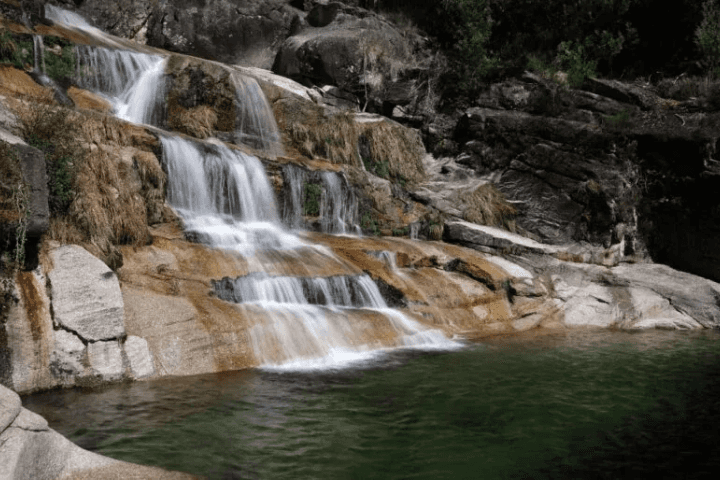
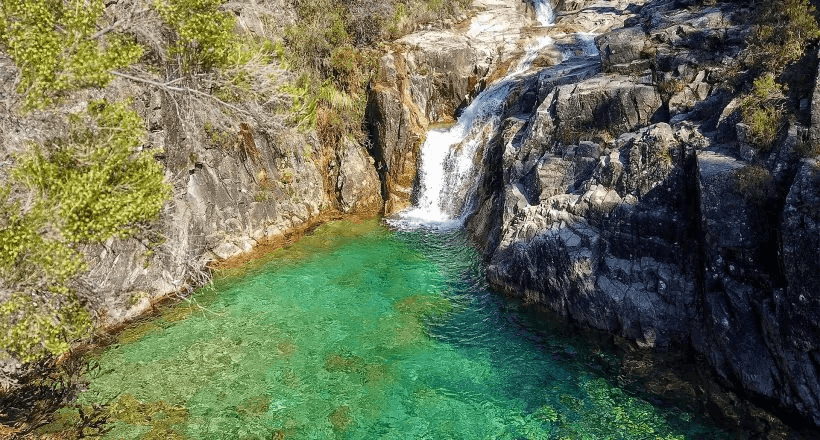
The first point of interest on the trail is the São Miguel Waterfall, better known as the Portela do Homem Waterfall — one of the most beautiful in Gerês, with a crystal-clear pool right by the São Miguel Bridge. Access to the pool is only from the left bank: the right bank lies within a total protection area of the national park, requiring authorisation from ICNF. The rocks by the water get very slippery, so it’s worth keeping younger children away from the edge.
The Roman Geira and its milestones
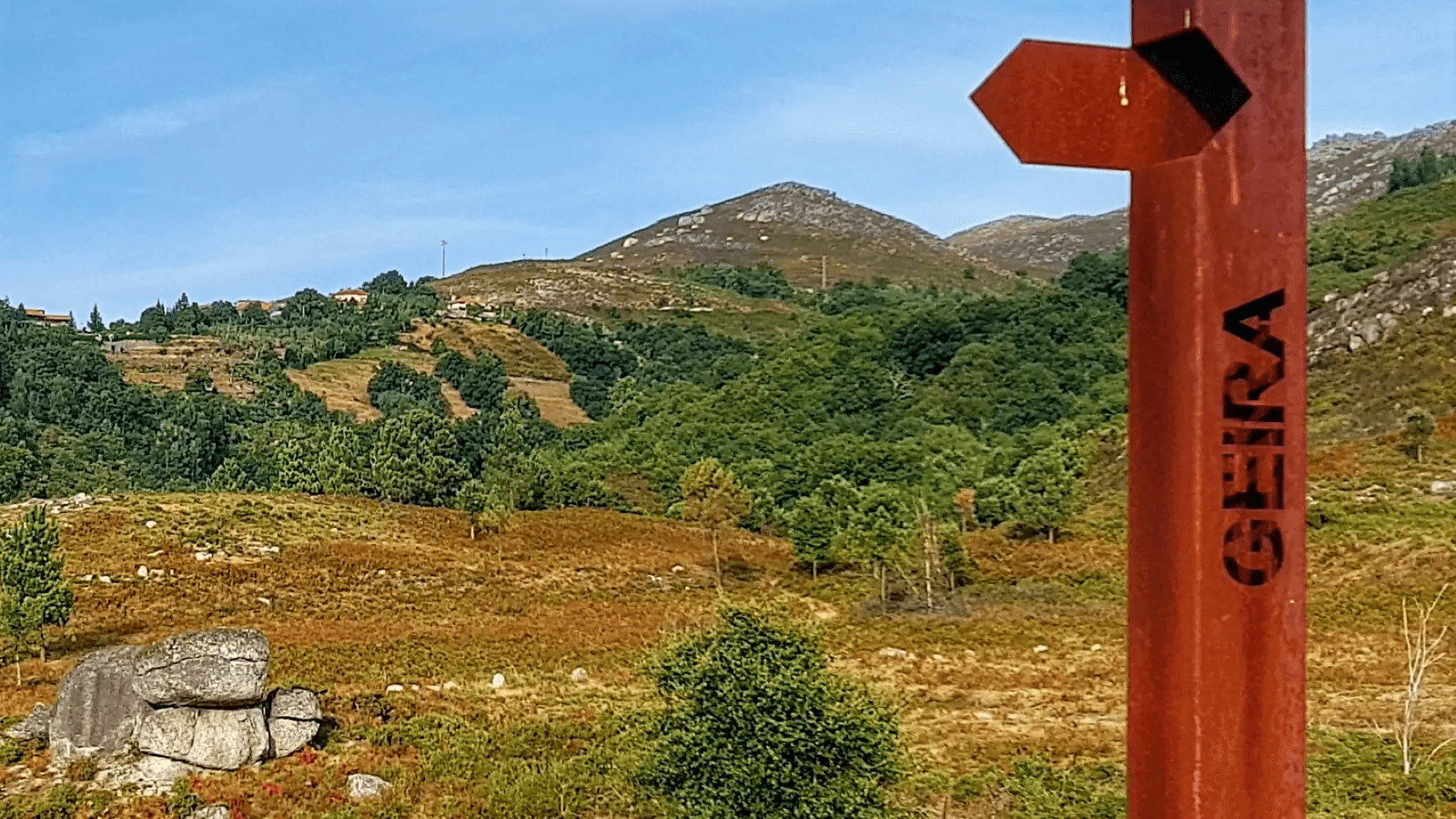
For about 2 km, the trail follows the Roman Geira (Via XVIII), the road built in the 1st century AD that connected Bracara Augusta (present-day Braga) to Asturica Augusta (Astorga, in Spain), crossing the Serra do Gerês. It’s considered one of the best-preserved Roman roads in the Iberian Peninsula, with stretches of original paving, bridge ruins and a significant collection of milestones — some still bearing legible inscriptions nearly two thousand years later. The most emblematic bridge along the route is the São Miguel Bridge, over the Homem River.
An enchanted forest (and the wild horses nearby)
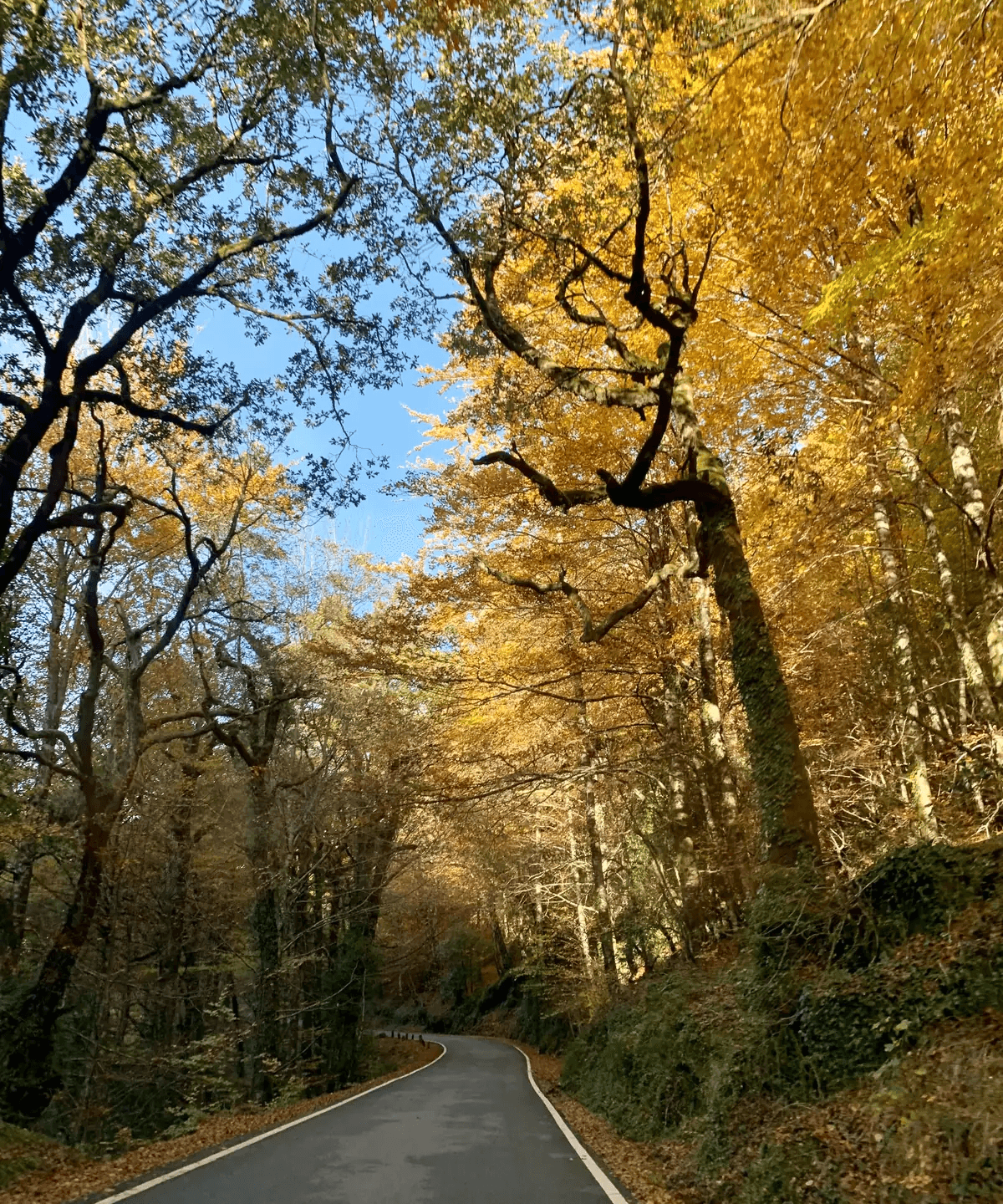
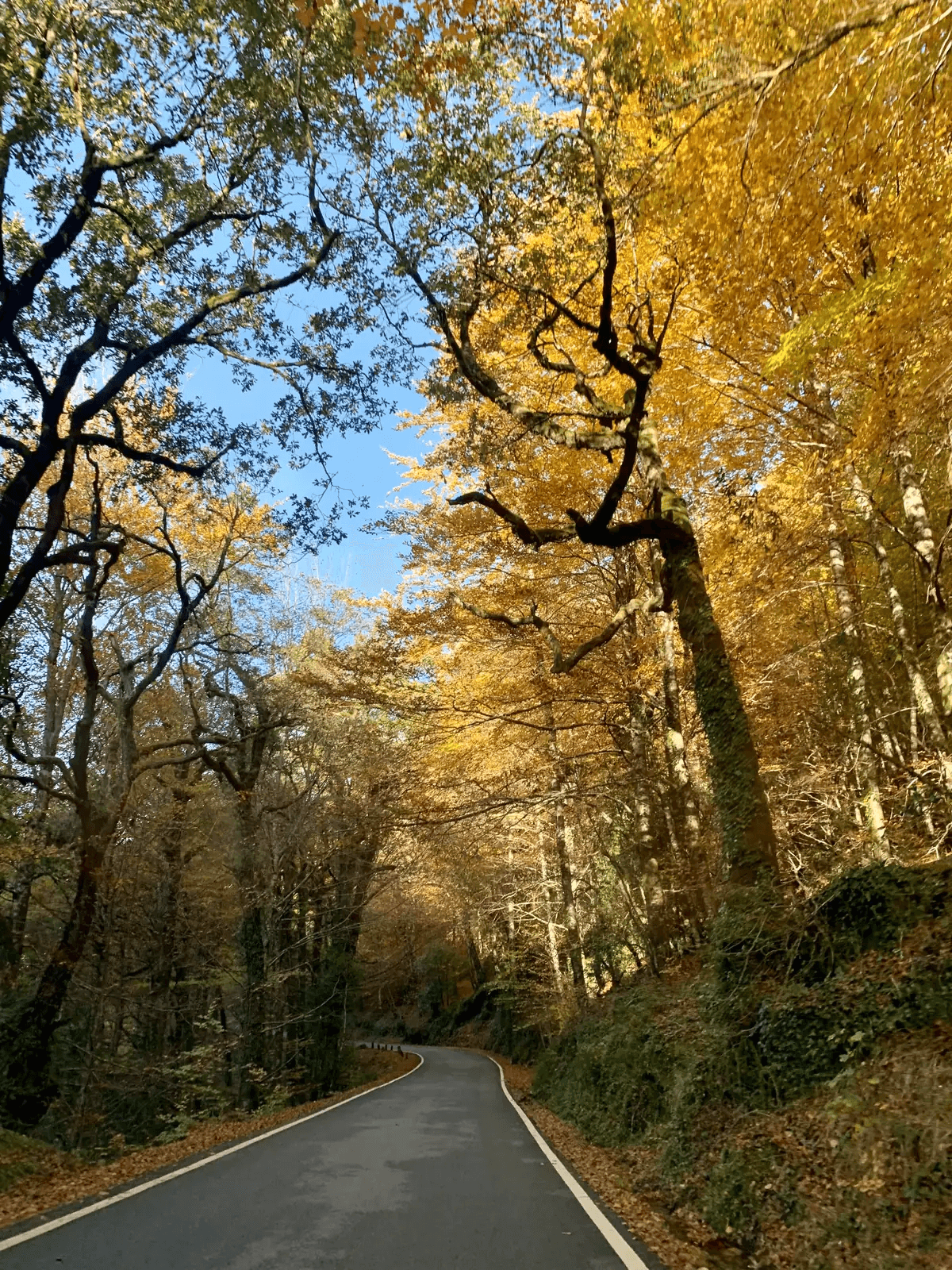
Beyond its historical value, Mata da Albergaria is above all a rare kind of forest: centuries-old oaks, light filtering through the canopy, and a dense understory where moss covers the rocks — the kind of woodland that barely exists at this scale in mainland Portugal anymore, which is why it’s classified as a biogenetic reserve. On the highlands surrounding the park, you may also spot garranos, the native wild horse breed of northern Portugal, used for centuries as a pack animal and now protected, roaming freely in the mountains of Gerês.
Practical tips for visiting
- Between June 1 and September 30, motor vehicle access to the forest is restricted, with a €1.5 fee per vehicle.
- There are no cafés or shops in Mata da Albergaria — bring water and food before setting off.
- The Roman Geira stretch can flood on days of heavy rain; avoid the trail in winter or right after storms.
- Wear footwear with good grip — the rocks near the São Miguel Waterfall get slippery, especially with kids around.
- On days of high fire risk, access to the Mata da Albergaria trails may be closed — check before you go.
Sources: VagaMundos, Terras de Bouro Municipality.